
What's in the Basket?
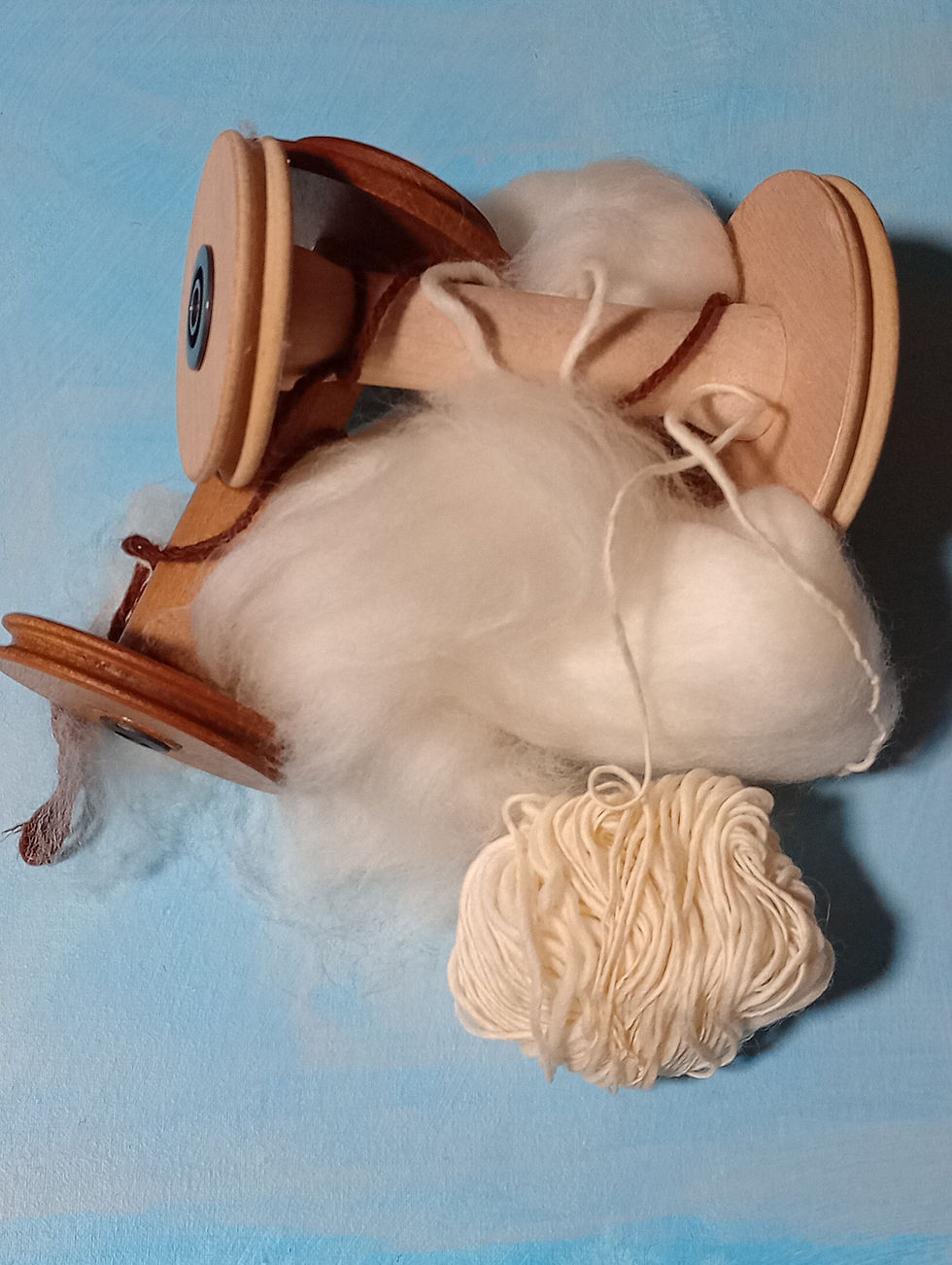
Handspun History
Handspinning has been around since the dawn of humanity. From the moment humans discovered fiber, they learned that they could twist it into cords, using it for rope, for baskets--and eventually, for clothing. Sheep and goats are the oldest known domestic livestock, both raised for fleece as well as for meat and milk. Across the world, fleece-bearing animals are often the cornerstones of societies, whether sheep, goats, rabbits, camels, yaks, llamas, alpacas, and even--in some rare cases--dogs. If it had hair, there's a good chance it was, at some point, bred for fleece.
Spinning and weaving were such important tasks that multiple societies had goddesses whose domain included weaving. Athena is the first to come to mind; but both the Fates and the Norns spun the threads of life and fate, while some goddesses were supposed to have woven creation into being. Heroines such as Penelope used their weaving to their advantage; and even the Valkyrie Brunhilde, a warrior who delighted in battle, also boasted of her prowess at the loom. What most stories don't say--simply because it was well-known--was that one weaver needed a small legion of spinners to provide for the loom!
After the Industrial Revolution, the need for handspinners dropped--and the craft began to be forgotten. For decades, spinning wheels and spindles were just curiosities, forgotten in antique stores, or set up as decoration. But the craft is experiencing a revival now.
When you buy handspun yarn, you're not just purchasing a crafting product. You're buying into an ancient tradition: a tangible part of history as old as mankind.
Join the Basket
Stay informed about our latest handspun yarn drops, creative embroidery patterns, and artisanal crafting tips delivered straight to your inbox.